WeMo wrapped
delta, leverage, partnerships, and planning for the decade

A little over a year ago, in February 2025, Jack and I were with our son and dog at a nearby park when we saw a Davidd Liu, CEO of WeMo Scooter, walk past us while speaking on his phone. Since he was busy on a call, I messaged him later to see how he was doing and if he needed any marketing support at WeMo.1
I knew Davidd from my time back when I worked at AppWorks, since he’s an entrepreneur that joined the community early on, founded a company called CHOCO TV that was eventually sold to LINE to become LINE TV, and then was asked to help expand and streamline operations for WeMo, another startup that joined the AppWorks community in later years. WeMo is a scooter ride-sharing company based in Taiwan, now in its 10th year of operating, founded by Jeffrey Wu and Jay Cheng.

After chatting with Davidd and the marketing lead Freya for a few months, I onboarded as an external consultant at the beginning of June 2025, and recently at the end of January 2026, I finalized my contract with them. I learned a lot and I believe I also added value to the team, so I would like to share some of my learnings and observations about my time there.
the real work starts before things become official → to build trust
Before I officially joined WeMo in June, I spent 4 months sending ideas to Davidd and Freya. I was curious about WeMo’s potential and already had a lot of context from being at AppWorks, so sharing those ideas felt natural and fun. It also gave us time to see if there was a good fit before making anything official.
I’ve previously mentioned my take on the marketing industry, but I think marketing can be seen in a much bigger picture than specific channels or one-off campaigns.2 At the end of the day, marketing should focus on how users feel when they think of the brand. How does a company communicate its true value and spirit to the customer?
Specifically for WeMo, and as a practice for myself when thinking about the potential of the product to the Taiwan market, I put together a simple brand positioning deck and shared it with the team. When putting together this deck, I wanted to use a positive framing only; meaning that I only wanted to know how WeMo adds value to users, rather than as a way to differentiate against competitors. I personally know a lot of people that use or have used WeMo before, so I know it’s a good product. Unfortunately, I do not drive, so I am not a WeMo user. One thing this experience taught me is that you don’t need to be a user to understand and position the product well.
To me, it’s only a matter of letting more people know about WeMo and to ride it at least once for them to be convinced of its value.
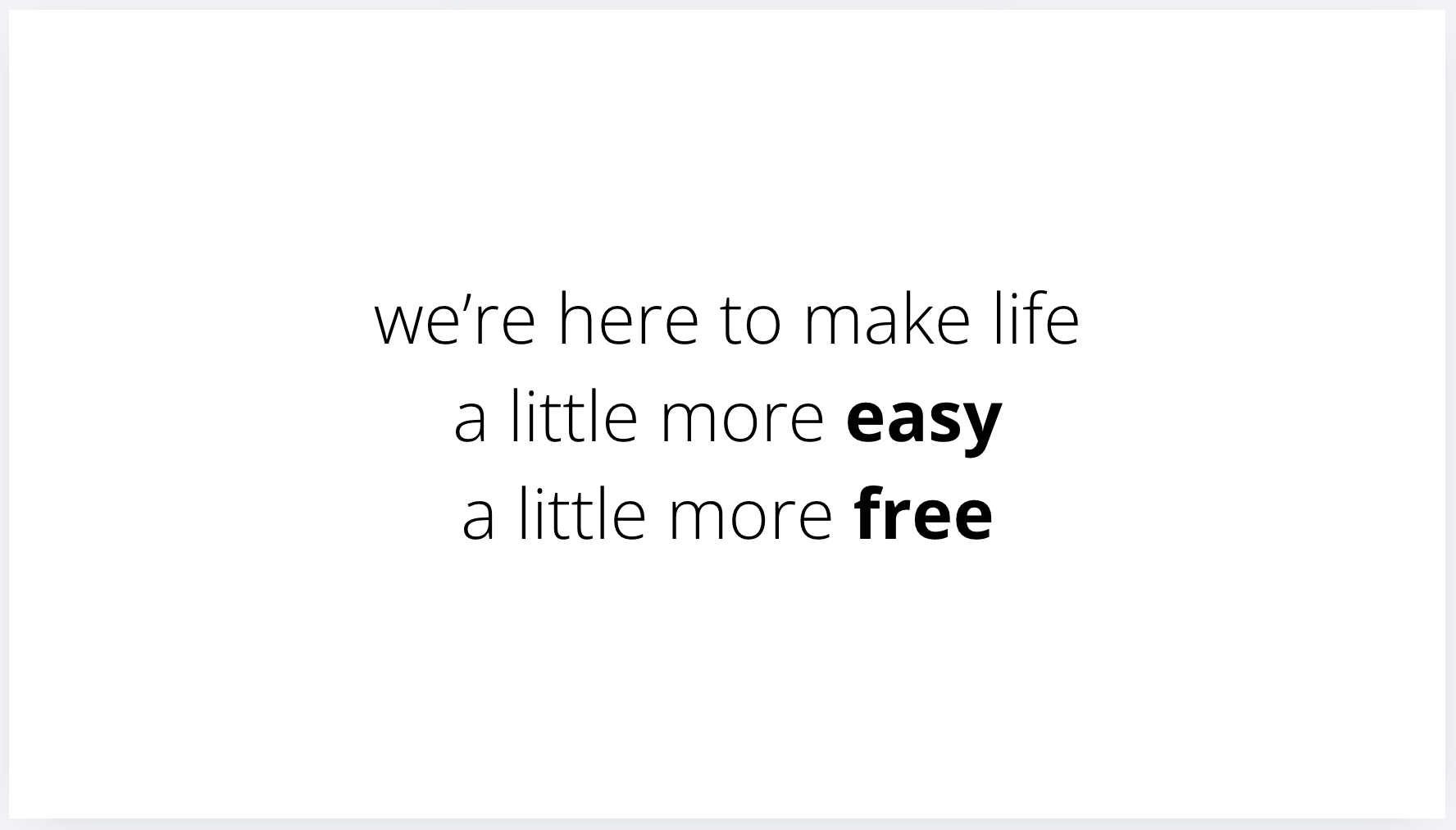
Some people like looking at brand positioning in terms of differentiation from competitors and comparables. To me, this kind of thinking is distracting and narrows the focus too much away from the customers. While many businesses try to make their market a zero-sum game, I believe that everyone wins when there’s healthy competition, and there’s a place for every brand if they understand themselves and their target audience (TA) well. So, the way I framed the brand positioning deck was to focus solely on WeMo’s vibe and spirit in the way that I saw it — everywhere, everyday, for everyone, and to choose it every time there’s a need for convenient transportation.
We also explored some other ideas, such as focusing on users who just got their drivers’ license and didn’t want to commit to buying a vehicle just yet, which is a perfect use case for WeMo. The team implemented this initiative, and the results were great, so soon after, I was asked to come on board to help support campus initiatives — bringing more students and the younger population to ride WeMo.
Although those beginning few months were less stable for me, which is one of the downsides of being a freelancer, it was incredibly important to build the relationship and trust with the team, so I’m glad I spent that time doing so.
working on high leverage campaigns → to move the needle
Back when I worked at Zappos, the marketing team was pretty big, with almost 100 people working in the department. Because of this, many of the newer recruits focused on small-scale campaigns, like A/B testing different button colors on email marketing newsletters, or A/B testing different keyword promotional messages for search engine marketing. I realized that this was the template for many marketers to learn how to think about running campaigns.
While there is a lot of value doing small tests, it’s only one part of learning to view the business as a whole. When I joined WeMo, I was tasked to work with the campus lead Yuri, who was a junior marketer, and I really wanted to encourage her to think of campaigns at a bigger scale.
The previously mentioned campaign for the new drivers’ license was one of them. Another WeMo marketing lead ran that campaign, but it turned out after looking at the data that around half of those new users were in the student age range.
Since I joined in June, which was right in the middle of summer vacation for students, Yuri and I decided to run a big summer vacation campaign #ㄧ起WeMo不emo, encouraging users to take photos of themselves with a WeMo, and riding WeMo as they spent their summer vacation traveling, working, taking extra classes, etc.
To come up with more high leverage campaigns, we decided to follow our TA’s lifestyle throughout the year, mapping major events and milestones during the academic year, and we ended up building a campus playbook where campaigns could be repeated and scaled throughout the year. This is also a good initiative internally, because the campus lead can then budget accordingly for the whole year, and prepare campaigns in advance knowing what was coming up. For example, we mapped: summer vacation, back-to-school, career fairs, finals, winter / LNY vacation, spring break, graduation, and part-time jobs. Ideally we’d have a campaign running for each of these major milestones in a student’s life.
Then, we can spend the year fully experimenting and running these campaigns, and the year after we’ll have a tested and true playbook to streamline ops and figure out what adjustments need to be made to campus initiatives. This also helps align ourselves with the users better, by being part of their journey rather than from above or outside.
partnerships and collabs → to position ourselves in the ecosystem
Because of my experience at AppWorks, I was quite connected to many founders, so I reached out to a few that I thought would have good collaboration synergies with WeMo. This included Cake for example, partnering with them on their career fair to attract more students to go and also be able to ride WeMo to and from the event easily.
We also tried to work with more startups in the ecosystem, and overall I think that WeMo is in a good position nowadays, showing great performance in 2025 and on track to do a great year in 2026 as well, which means we’re considered one of the “big guys” in the ecosystem these days.
What this means is that when we work with partners in the ecosystem, especially non-corporate teams, we shouldn’t always look for a 1-1 relationship or an “equal” trade in resources; since we’re in a successful position, we should actually extend partnerships where we can be helping the ecosystem grow together, without being stingy about what we can provide, as many others may not be able to match what we can offer anyway.
However, it’s also important to note the ROI in collaborations from a time resource allocation. If a partner is easy to work with, then we can do many collaborations with them in the future. If a partner is quite difficult to work with, and we also don’t get much out of the relationship, then it can be a good trial and lessons learned, but perhaps we don’t need to think of long-term collaborations with them moving forward.
There were a few partners that had limited bandwidth for real back-and-forth when we were connecting with them. However, given that the ecosystem was well-connected, we also knew the context of whether they were going through some internal changes or restructuring, and it made it easier for us to work with these partners.
the next 10 years
This year is WeMo’s 10th year as a company, and they are still growing in a healthy way, which means that the next 10 years will look significantly different, and what is done today will be setting the tone for the upcoming decade in WeMo’s future history.
During the end of my contract with the team, after building the campus playbook, I focused on WeMo’s longevity. We looked into what building a true WeMo ecosystem could look like, taking a page out of Grab or Go-Jek’s super app status. How WeMo can work with partners with different needs, which includes employee benefits.
After sending the branding deck earlier in the relationship, WeMo also started putting in more resources to define the brand more clearly to users. I think this part is also very important for the upcoming decade.
We also prioritized more ad-hoc team building initiatives, and I was really happy to hear about the big full company trip to Macau, paid for by WeMo. I did a lot of this kind of team-building in different orgs, and I think going to a new environment while talking about work really helps stretch the creative muscles.
There is good momentum now, and I think that’s the most important part. One of the risks for the future is complacency, not that I see it happening at all, but typically for companies or people that started off as the underdog, but eventually wins the market, I notice they tend to become slower and more complacent at the top, which is a dangerous place to be when newcomers or old guards decide to move fast.
Overall, I had a great experience at WeMo and I hope I was able to provide a lot of value to the team. I looked at my reports from the very start and compared them to the ones I sent in at the very end, and there was big delta, which was nice to see. I’m rooting for the team and I’m confident that they will continue to give a great riding experience to their users.
Thanks WeMo!
I’ve written about how I believe everything is a signal, which some might see as a woo-woo mindset, but it allows me to view the universe in a very macro and meaningful way. When I saw Davidd, it felt like a sign to reach out »

I wrote more about this in my piece for Numbers Protocol »

Freelancing seems like an intensively relationship-based path. I'm fascinated with your approach to this (and the almost automated "think of someone" -> "reach out to someone" way of working). If you ever write more about your philosophy on this in the salaried corporate world vs freelancing I am so sat!!
Love seeing the growth here for WeMo! Sounds like you did a great job here